
Tamiya
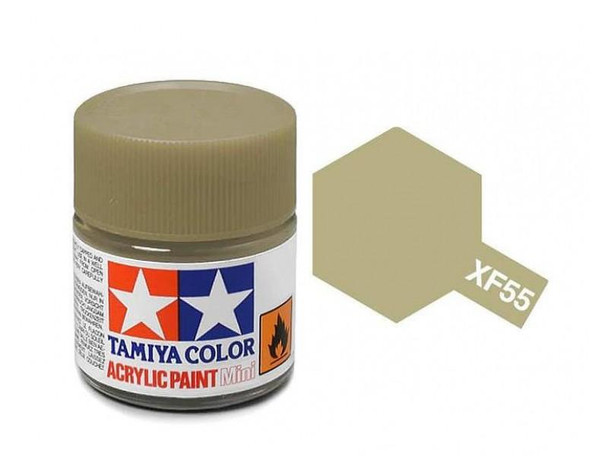
TAMXF55 - Tamiya - Flat Deck Tan Acrylic - 10mL Bottle
- SKU:
- TAMXF55
- UPC:
- 4950344069842
- Condition:
- New
- Availability:
- In-Stock items usually Ship within the next business day
- Shipping:
- Calculated at Checkout

Description
TAMXF55 - Tamiya - Flat Deck Tan Acrylic - 10mL Bottle
Tamiya XF-55 Flat Deck Tan is designated by Tamiya itself as "a color perfect for the depiction of wooden deck surfaces" — a warm, pale, yellowish-tan that captures the sun-bleached appearance of teak and similar hardwood deck planking on warships in 1/350, 1/700, and 1/1200 scale. Tamiya's original colour guide lists XF-55 specifically as "Wooden deck" for ships. The colour sits between a pale buff and a light ochre, simulating the weathered, salt-scrubbed appearance of well-maintained teak decks — darker and warmer than XF-57 Buff, and more yellow-tan than the redder XF-52 Flat Earth. Beyond its primary ship modelling application, XF-55 serves as a versatile light desert sand base for North African and Pacific theatre AFV and figure work, and as a starting point for light dust and weathering effects on any subject.
Tamiya Acrylic paints are a hybrid acrylic formula built on water-soluble resin — they can be thinned with water, isopropyl alcohol, or lacquer thinner, and clean up easily with water before curing. When thinned with Tamiya Lacquer Thinner, the paint lays down faster, dries harder, and bonds more aggressively to the substrate. The hybrid resin chemistry means the paint film remains slightly soluble after initial drying — subsequent brush strokes can reactivate and lift the layer below if applied without restraint. For this reason, airbrushing is strongly recommended for large surface coverage. Brush painting is workable for detail and touch-up work, but requires a gentle, deliberate stroke and a fully cured base layer. See our Tamiya Acrylic vs. Enamel vs. Lacquer guide for a full breakdown of paint type differences.
- IJN battleship and carrier teak decks — the teak weather deck planking on Imperial Japanese Navy capital ships and fleet carriers; the Kaga, Akagi, Hiryu, Soryu, Shokaku, and Zuikaku all carried teak deck planking that weathered to a pale tan under Pacific sun exposure; Yamato, Musashi, and Nagato had cypress decks with a similar warm-tan appearance; XF-55 provides the correct pale, sun-bleached tone for 1/350 and 1/700 Tamiya Yamato, Musashi, and carrier kit deck surfaces before weathering washes are applied
- Royal Navy teak decks — the teak weather deck planking on British capital ships and heavy cruisers; HMS King George V, HMS Prince of Wales, HMS Repulse, and HMS Hood all carried teak deck planking; RN teak was regularly holystoned to a pale, almost white-tan tone on Home Fleet ships before WWII, darkening to a warmer tan in operational service; XF-55 with a light brown wash accurately represents mid-war Royal Navy teak deck work in 1/350 and 1/700 scale
- Kriegsmarine wooden deck surfaces — teak and similar hardwood deck planking on German heavy warships including the battleships Bismarck, Tirpitz, Scharnhorst, and Gneisenau, and the heavy cruisers Hipper and Blücher; a panel line wash of XF-10 Flat Brown or XF-64 Red Brown over an XF-55 base reproduces the darkened caulking between deck planks convincingly in 1/350 scale
- USN wooden deck areas — teak and fir deck planking on US Navy capital ships and pre-war cruisers; USS Arizona, USS Nevada, USS Oklahoma, and USS Tennessee at Pearl Harbor (December 1941) all carried wooden deck sections on their forecastles and aft decks; later war USN carriers including USS Essex and USS Intrepid had steel flight decks but wooden hangar deck surfaces appropriately represented by XF-55
- IJN carrier flight deck painted tan — a number of IJN carrier flight decks were overpainted with a brownish-tan paint (distinct from bare wood) for camouflage purposes as documented by Snyder & Short IJN paint chip research; XF-55 provides a workable starting point for this overpainted carrier deck tone before green camouflage patterns are applied over it
- North African desert sand base — a starting point for the very pale desert sand and chalk dust accumulation effects on North African campaign subjects; mixed with XF-57 Buff or XF-59 Desert Yellow for the pale, bleached desert floor dust that accumulated on vehicle running gear, skirts, and lower hull areas in Libya and Tunisia, 1941–43
- Wooden AFV stowage and pioneer equipment — used for natural wood ammunition crates, wooden rifle stocks and tool handles, supply crates, and other unfinished wood details across all AFV, artillery, and diorama subjects; provides a more convincing raw wood base than XF-57 Buff or XF-10 Flat Brown before wood grain washes and highlights are applied
- Light dust and chalky weathering effects — mixed with XF-2 Flat White and applied thinned as a dust accumulation filter over vehicle tyres, road wheels, track links, and lower hull surfaces to simulate the chalky white road and field dust typical of Mediterranean, Middle Eastern, and Central European theatre operations in dry weather conditions
For full Tamiya paint colour references and modelling compatibility charts, visit our Tamiya Paint Colour Chart — Complete Guide for Scale Modellers.
Thin and airbrush with Tamiya Lacquer Thinner, Mr. Color Thinner, or Mr. Color Leveling Thinner.
- 10ml glass jar
- Part of the Tamiya Acrylic paint range
Related Products
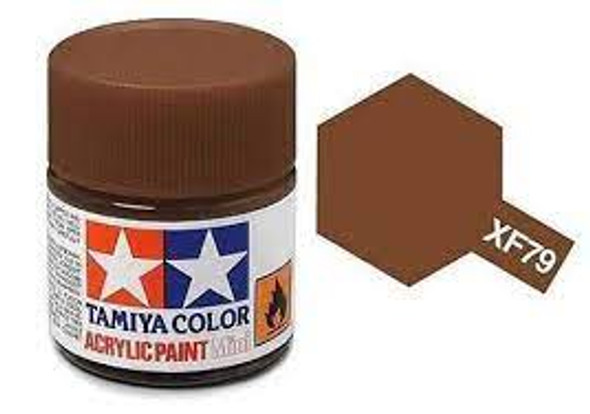
TAMXF79 - Tamiya - Flat Linoleum Deck Brown Acrylic - 10mL Bottle
Tamiya

TAMXF78 - Tamiya - Flat Wooden Deck Tan Acrylic - 10mL Bott le
Tamiya
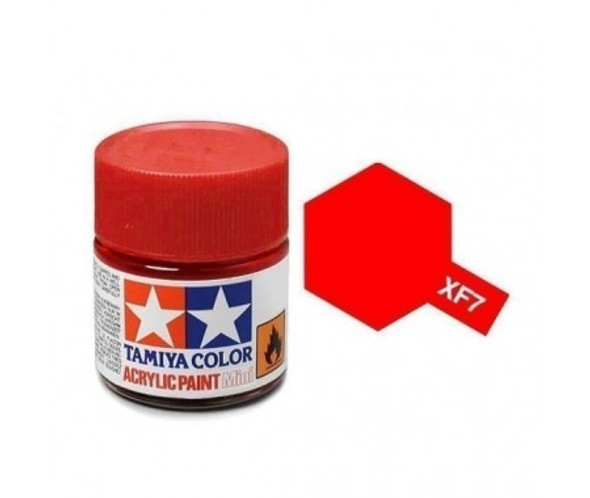
TAMXF7 - Tamiya - Flat Red Acrylic - 10mL Bottle
Tamiya
TAMXF86 - Tamiya - Flat Clear Acrylic - 10mL Bottle
Tamiya
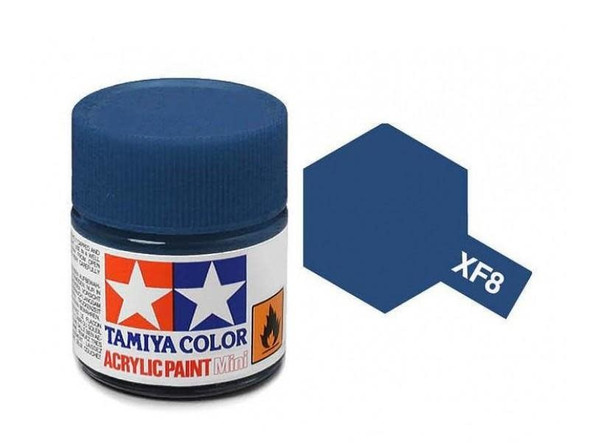
TAMXF8 - Tamiya - Flat Blue Acrylic - 10mL Bottle
Tamiya