
How to Mask Aircraft Canopies: The Cover & Cut Method | Wheels & Wings Hobbies
How to Mask Aircraft Canopies: The Cover & Cut Method
Step-by-step masking guide · Works on any scale aircraft · Tamiya tape & hobby knife technique · Includes tips for soft-framed and vac-form canopies
Unmasking the Mystery Behind Masking Aircraft Canopies
Masking canopies is widely considered the most frustrating part of aircraft modelling. Most modellers will agree it's the bane of their existence — but it really doesn't need to be. With the right tools and a simple method, it becomes a straightforward and even satisfying part of the build process.
This guide covers the Cover & Cut method: laying one large piece of masking tape over the canopy, burnishing it into the frame edges with a toothpick, and trimming along each frame line with a sharp hobby knife. It works reliably on any canopy with well-defined framing, from small 1/72 props through to large jet canopies.
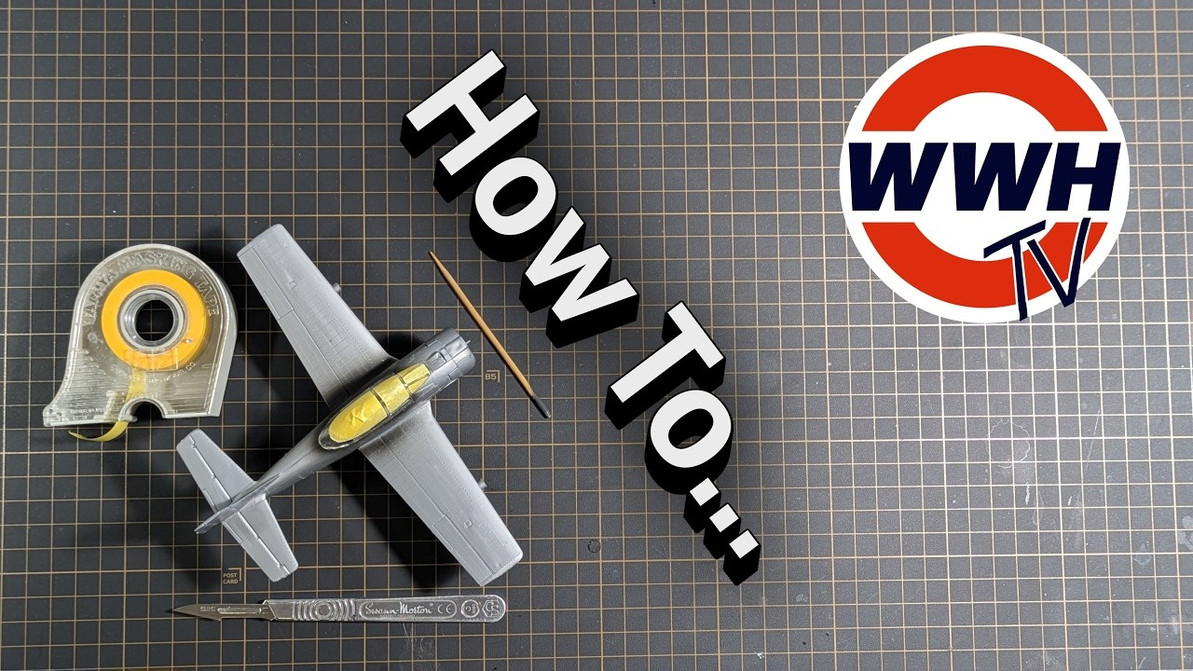
The guide is based on the Wheels & Wings TV video above, demonstrated on a 1/72 Heller T-28 Fennec — the French-built version of the American T-28 Trojan — which has a large, clearly framed canopy that illustrates the method perfectly.
You only need three things: masking tape, a toothpick, and a sharp hobby knife. All products used are stocked at Wheels & Wings Hobbies in Toronto and available online with Canada-wide shipping.
What you'll need — canopy masking supplies
Tamiya Masking Tape — standard widths
Tamiya Masking Tape — dispenser sets
Tamiya Masking Tape — thin precision widths
Hobby Knives
Replacement Blades
Other
- Toothpick or cocktail stick — slightly larger variety preferred
- Small piece of fine sandpaper (to shape the toothpick tip)
Prepare Your Toothpick
A standard toothpick works, but a slightly larger cocktail stick gives better control and doesn't flex as much under pressure. The key modification is the tip: you want a rounded point, not a blunt flat end and not a sharp spike. Take a small piece of fine sandpaper and gently work the end of the toothpick to a soft, rounded point. This shape is ideal for pressing tape firmly into the corner where the canopy glazing meets the frame without puncturing or tearing the tape.
The rounded tip lets you apply firm, even pressure directly into the tape-to-frame junction without slipping or snagging. A flat tip won't reach the corner properly; a sharp tip will pierce the tape. A few seconds of sanding makes a noticeable difference in the quality of the seal.
Kamiyasu Sanding stick Set
Fit a Fresh Blade
Blade sharpness is not negotiable for this technique. A dull blade requires pressure to cut, and pressure causes the blade to skip and slip. With a brand new blade, you can let the weight of the knife do the work — the edge will follow the frame line precisely without any force from your hand. Change the blade before you start masking, even if the current one has only been used once or twice. The few seconds it takes is insurance against a ruined canopy.
Cover the Canopy with Tape
Tear off a piece of masking tape large enough to cover a significant portion of the canopy in one go. The goal at this stage is coverage, not precision — lay the tape loosely over the glazing so it overlaps the frame on all sides. Don't worry about the overhang; that all gets trimmed in the next step. The 18mm or 40mm width tape works well for larger canopy sections. Starting with the largest clear panel and working outward is generally the most efficient approach.
Burnish into the Frame Edge
This is the most important step for getting a clean paint edge. Take your prepared toothpick and firmly press the tape down into the corner where the clear glazing meets the raised frame. Work along the entire length of each frame line, pressing consistently so the tape forms a tight seal right at the junction. You can check your progress by catching the canopy at an angle under a light — a well-burnished edge will show a clean, sharply defined line where the tape meets the frame.
Key tip: Take your time on this step. The burnishing is what prevents paint from wicking under the tape edge, which causes the ragged bleed lines that make canopies look poorly painted. A few extra seconds per frame line here will save significant clean-up time after painting.
Cut Along the Frame Lines
Brace your hand on the model for stability, then bring the very tip of the blade down into the corner where the tape has been burnished against the frame. Do not press down. Let the weight of the knife provide all the cutting force. With a sharp blade on tape that is already pressed into the corner, this is all the force you need. Slide the blade along the frame line in a single smooth stroke where possible. Peel off the excess tape from over the frame, and you are left with a precisely masked panel.
Repeat across the entire canopy, covering and cutting section by section until all glazed areas are masked. Work methodically and you will end up with every clear panel protected and every frame line exposed for painting.
Why no pressure? Pressing down causes the blade to deflect sideways the moment it encounters any resistance. This is what causes those unwanted cuts into the frame or clear areas. The blade is sharp enough that its own weight plus the guide of the burnished tape edge will do the job cleanly every time.
Paint the Canopy Framing
With the canopy fully masked, apply your cockpit interior colour or canopy frame colour before any exterior primer or paint. This step is often overlooked, but it matters: the canopy is clear all the way through, so whatever colour is on the inside of the frame will be visible when the model is finished. Painting the frames with your grey primer or exterior colour without first addressing the interior will result in a noticeably wrong look when the canopy is viewed from any angle.
Reminder: Paint the interior cockpit colour on the masked canopy frames first. Only after this should you proceed to applying your exterior primer and camouflage. The clear parts make the interior visible — don't skip this step.
Soft frames, vac-form canopies, or no visible framing at all?
The Cover & Cut method works best when the canopy has sharp, well-defined frame lines to cut against. If the framing is soft, indistinct, or entirely absent (as is common on vac-form canopies), use a different approach: map out each individual panel using the narrow precision masking tapes and apply them strip by strip.
Lay the narrow tape along each frame line individually, building up a grid of tape that covers the frame itself. Trim any tape that overlaps from one panel into the next. Once the framing is mapped out, fill in the open panel areas with wider tape or your liquid masking fluid of choice. This approach is slower, but gives you full control on canopies where there is nothing precise enough to cut against.
Precision widths for frame-mapping:
- Tamiya Masking Tape 1mm — fine frame lines on 1/72 and small-scale canopies
- Tamiya Masking Tape 2mm — good for 1/48 and medium frame widths
- Tamiya Masking Tape 3mm — wider frames, 1/32 scale, or bold jet canopy framing
For a full walkthrough of this strip-by-strip technique, see our Hasegawa 1/48 Zero video, where the poorly defined canopy framing on that kit makes it the ideal example.
All masking tape widths and hobby knives in this guide are stocked at Wheels & Wings Hobbies, Toronto, and available online with Canada-wide shipping. Whether you're masking a small 1/72 prop canopy or a large 1/32 jet, Tamiya tape gives a consistent, clean edge every time.
Shop Tools & Tape →Recent Posts
-

John's Starcraft Zerg Queen Paint Guide - Build Feature
Wheels and Wings Hobbies - Miniature Paint Guide John's Starcraft Zerg Queen Archon Studio - Starcra …Sep 24, 2026 -

Vlad's Tomb King on Necrolith Bone Dragon Paint Guide - Build Feature
Wheels and Wings Hobbies - Miniature Paint Guide Vlad's Tomb King on Necrolith Bone Dragon Warhammer …Sep 10, 2026 -

Kyle Paints Azrael, Supreme Grand Master of the Dark Angels - Build Feature
Wheels and Wings Hobbies - Miniature Paint Guide Kyle Paints Azrael, Supreme Grand Master of the Dar …Sep 09, 2026