
Tamiya
TAMXF11 - Tamiya - Flat IJN Green Acrylic - 10mL Bottle
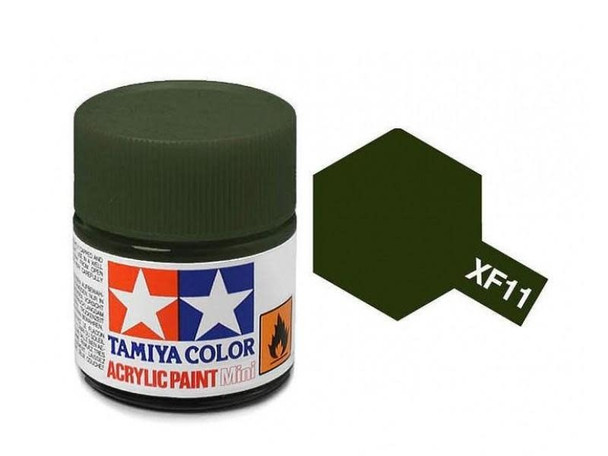
- SKU:
- TAMXF11
- UPC:
- 4950344069606
- Condition:
- New
- Availability:
- In-Stock items usually Ship within the next business day
- Shipping:
- Calculated at Checkout

Description
TAMXF11 - Tamiya - Flat IJN Green Acrylic - 10mL Bottle
Tamiya XF-11 Flat IJN Green represents the dark upper-surface green — known in Japanese documentation as an-ryokushoku (暗緑色, "dark green") — adopted by the Imperial Japanese Navy from 1943 as the standard camouflage colour for carrier and land-based aircraft operating in the Pacific theatre. The shade is a deep, blackened olive-green with strong depth and very low reflectivity. In Tamiya's range it is specifically associated with Nakajima-built airframes, where the factory-applied green tended toward a slightly darker and more neutral tone than the Mitsubishi variant (represented by XF-70). Both sit within the broader an-ryokushoku standard, and the modeller's choice between XF-11 and XF-70 should follow the aircraft's manufacturer, not just type. The colour was applied to upper surfaces in a two-tone scheme paired with a grey-green underside (hai-ryokushoku), with the upper green often showing significant variation between manufacturers, production batches, and field-applied touch-ups — giving modellers legitimate grounds to adjust and weather the shade accordingly.
Tamiya Acrylic paints are a hybrid acrylic formula built on water-soluble resin — they can be thinned with water, isopropyl alcohol, or lacquer thinner, and clean up easily with water before curing. When thinned with Tamiya Lacquer Thinner, the paint lays down faster, dries harder, and bonds more aggressively to the substrate. The hybrid resin chemistry means the paint film remains slightly soluble after initial drying — subsequent brush strokes can reactivate and lift the layer below if applied without restraint. For this reason, airbrushing is strongly recommended for large surface coverage. Brush painting is workable for detail and touch-up work, but requires a gentle, deliberate stroke and a fully cured base layer. See our Tamiya Acrylic vs. Enamel vs. Lacquer guide for a full breakdown of paint type differences.
- Nakajima A6M2/A6M5 Zero-sen (Reisen) — upper surface an-ryokushoku on Nakajima-built A6M5 Model 52 variants from 1943 onward, operating from carriers Zuikaku and Shokaku at the Battle of the Philippine Sea (June 1944) and from land bases in the Marianas and Home Islands through to August 1945; XF-11 preferred over XF-70 for Nakajima-contract airframes
- Nakajima B6N Tenzan (Jill) — standard upper-surface green on the B6N2 torpedo bomber entering fleet service from August 1943, operating from Taiho, Junyo, and Hiyo at the Battle of the Philippine Sea; also deployed from land bases at Truk, Rabaul, and Kyushu during 1944–45
- Yokosuka D4Y Suisei (Judy) — an-ryokushoku upper surfaces on D4Y2 and D4Y3 dive bomber variants from 1943, flying from Shokaku and Zuikaku at the Battle of the Philippine Sea and in kamikaze operations from Kyushu, October 1944–August 1945
- Kawanishi N1K1-J / N1K2-J Shiden (George) — factory-applied dark green upper surfaces on the land-based interceptor operating from Matsuyama, Omura, and Kure air bases, 1944–45, including the elite 343rd Kokutai "Gale Fighter Group" defending the Home Islands
- Kyushu Q1W Tokai (Lorna) — an-ryokushoku on the dedicated anti-submarine patrol bomber operating from coastal bases across Kyushu and Shikoku, 1944–45, hunting US submarines in the waters around Japan
- Yokosuka P1Y Ginga (Frances) — upper-surface dark green on the twin-engine land attack bomber deployed from Kanoya and Katori air bases in conventional and kamikaze strikes against the US fleet during the Okinawa campaign, April–June 1945
- Nakajima C6N Saiun (Myrt) — an-ryokushoku upper surfaces on the high-speed carrier reconnaissance aircraft operating from the Home Islands on long-range missions over the Central Pacific, 1944–45; one of the fastest piston-engine aircraft the USN encountered late in the war
- Mixing and modulation — XF-11 used as a shadow mix into XF-70 for panel-line modulation on Mitsubishi-built aircraft, or lightened with XF-2 Flat White for post-production fading effects on heavily weathered late-war subjects
For full Tamiya paint colour references and modelling compatibility charts, visit our Tamiya Paint Colour Chart — Complete Guide for Scale Modellers.
Thin and airbrush with Tamiya Lacquer Thinner, Mr. Color Thinner, or Mr. Color Leveling Thinner.
- 10ml glass jar
- Part of the Tamiya Acrylic paint range
Related Products
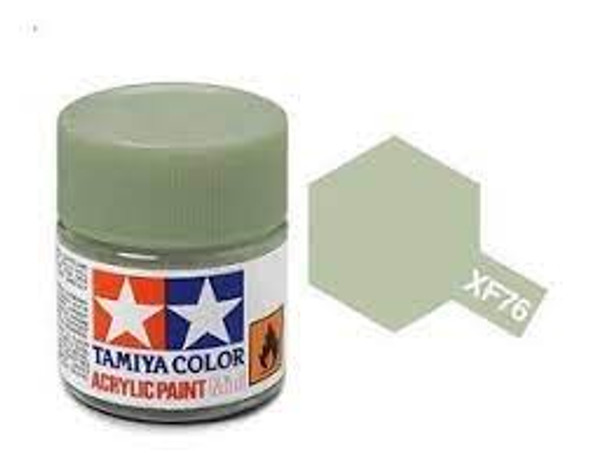
TAMXF76 - Tamiya - Flat IJN Gray Green Acrylic - 10mL Bottl e
Tamiya
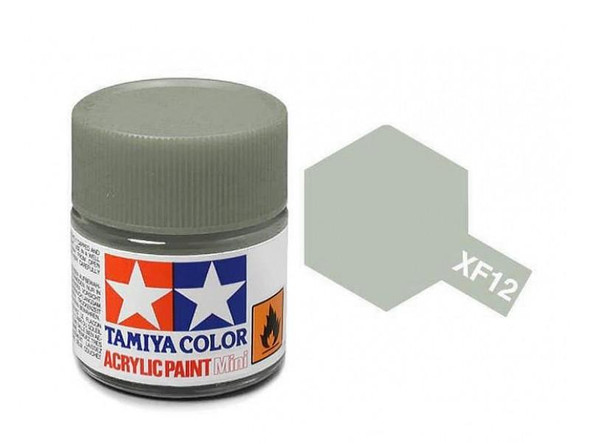
TAMXF12 - Tamiya - Flat IJN Gray Acrylic - 10mL Bottle
Tamiya
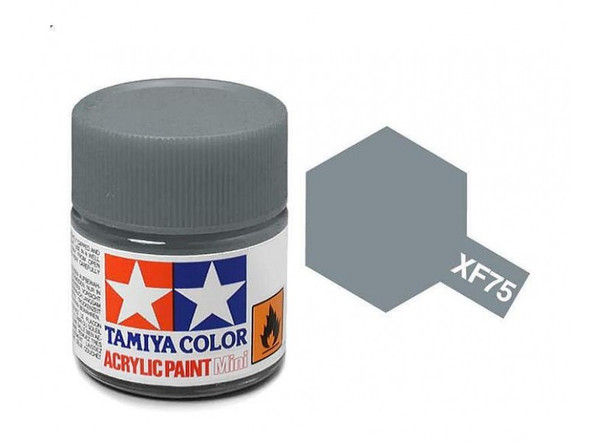
TAMXF75 - Tamiya - Flat IJN Gray Acrylic - 10mL Bottle
Tamiya

TAMXF70 - Tamiya - Flat IJN Dk Green 2 Acrylic - 10mL Bottl e
Tamiya
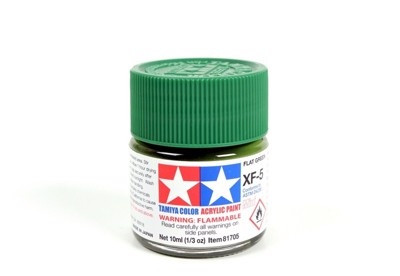
TAMXF5 - Tamiya - Flat Green Acrylic - 10mL Bottle
Tamiya